Floodwater poses significant health risks beyond structural damage. It is often a toxic mixture containing sewage, chemicals, and pathogens. Contact with floodwater can expose individuals to serious health dangers, and the remaining moisture can promote mold and bacteria growth.
Bacterial Infections: The Invisible Threat
One of the most immediate dangers in floodwater is the high concentration of bacteria. When sewer systems overflow or septic tanks rupture, human and animal waste mixes with the water, introducing harmful pathogens into your environment.
Common Bacterial Culprits
- E. coli and Salmonella: These bacteria are commonly found in sewage and can cause severe gastrointestinal distress. Swallowing even a small amount of contaminated water can lead to nausea, vomiting, diarrhea, and dehydration.
- Leptospirosis: This bacterial disease is spread through the urine of infected animals, which can easily contaminate floodwaters. It can enter the body through skin cuts or mucous membranes (eyes, nose, mouth). Without treatment, it can lead to kidney damage, meningitis, or liver failure.
- Tetanus: While Tetanus is not carried by the water itself, the debris hidden within it poses a risk. Stepping on a rusty nail or sharp metal object in floodwater can introduce Tetanus bacteria into the bloodstream.
Symptoms to Watch For
If you have been exposed to floodwater and experience high fever, severe headache, muscle aches, or vomiting, seek medical attention immediately. These could be early signs of a serious bacterial infection.
Viral Infections and Waterborne Diseases
Viruses thrive in contaminated water, particularly where sanitation systems have been compromised. While boiling water advisories are common during floods, direct contact with the water can also be dangerous.
Risks from Sewage Contamination
Hepatitis A and Norovirus are two primary concerns during flooding events. Hepatitis A is a liver infection caused by ingesting contaminated food or water. Norovirus is highly contagious and causes severe vomiting and diarrhea. Both can spread rapidly in emergency shelter situations or households where hygiene practices are difficult to maintain due to water shortages.
The best defense against viral infections during a flood is rigorous hygiene. Wash your hands frequently with soap and clean water, especially before eating. Inside your food there could be various micro-organisms, so be care ful while cooking or cleaning. If clean water isn’t available, use an alcohol-based hand sanitizer.
Fungal Exposure: The Danger of Mold

The health risks don’t end when the water dries up. Floodwaters saturate building materials, creating the perfect environment for mold growth. Mold can begin to grow on damp surfaces within 24 to 48 hours.
Respiratory Hazards
Exposure to mold spores can trigger asthma attacks, allergic reactions, and respiratory infections. People with compromised immune systems or chronic lung diseases are particularly vulnerable.
Stachybotrys Chartarum (Black Mold)
This greenish-black mold grows on materials with high cellulose content, such as fiberboard, gypsum board, and paper. It requires constant moisture to grow, making it a common aftermath of significant flooding. Symptoms of exposure include chronic coughing, sneezing, irritation to the eyes, and skin rashes.
Proper remediation often requires professional help. Homeowners needing water damage remediation services in Orem, UT, can ensure that moisture is removed correctly before it becomes a breeding ground for these pathogens. Removing the water isn’t enough; drying the structure completely is essential to stop fungal growth.
Chemical Contamination

Floodwater picks up everything in its path. As it moves across roads, farms, and industrial sites, it collects a hazardous cocktail of chemicals.
Sources of Contamination
- Household Chemicals: Cleaners, bleaches, and detergents from under kitchen sinks can mix, creating dangerous fumes or skin irritants.
- Automotive Fluids: Oil, gasoline, and antifreeze from submerged vehicles or garages often create a sheen on the surface of floodwater.
- Agricultural Runoff: If you live near farmland, the water may contain high levels of pesticides, herbicides, and fertilizers.
Contact with these chemicals can cause chemical burns, skin rashes, and eye irritation. Inhaling fumes from chemical slicks in enclosed spaces, like basements, can also lead to respiratory distress or disorientation.
Physical Hazards Beneath the Surface
Beyond microscopic threats, floodwater conceals physical dangers that can cause traumatic injuries. Because the water is typically murky or brown, you cannot see where you are stepping.
Hidden Debris
Storm surges often displace dangerous objects. Broken glass, jagged metal, lumber with protruding nails, and displaced manhole covers can all be hidden inches below the surface. A simple cut from debris not only causes physical pain but provides an entry point for the bacteria mentioned earlier.
Electrical Risks
Never enter a flooded basement or room unless you are certain the power has been turned off at the main breaker. Water conducts electricity, and downed power lines or submerged outlets can electrocute anyone who steps into the water. If you hear buzzing or see sparks, evacuate immediately.
Preventing Exposure and Staying Safe
The most effective way to avoid illness is to minimize contact with floodwater. However, if you must walk through it or are involved in cleanup efforts, follow these safety guidelines.
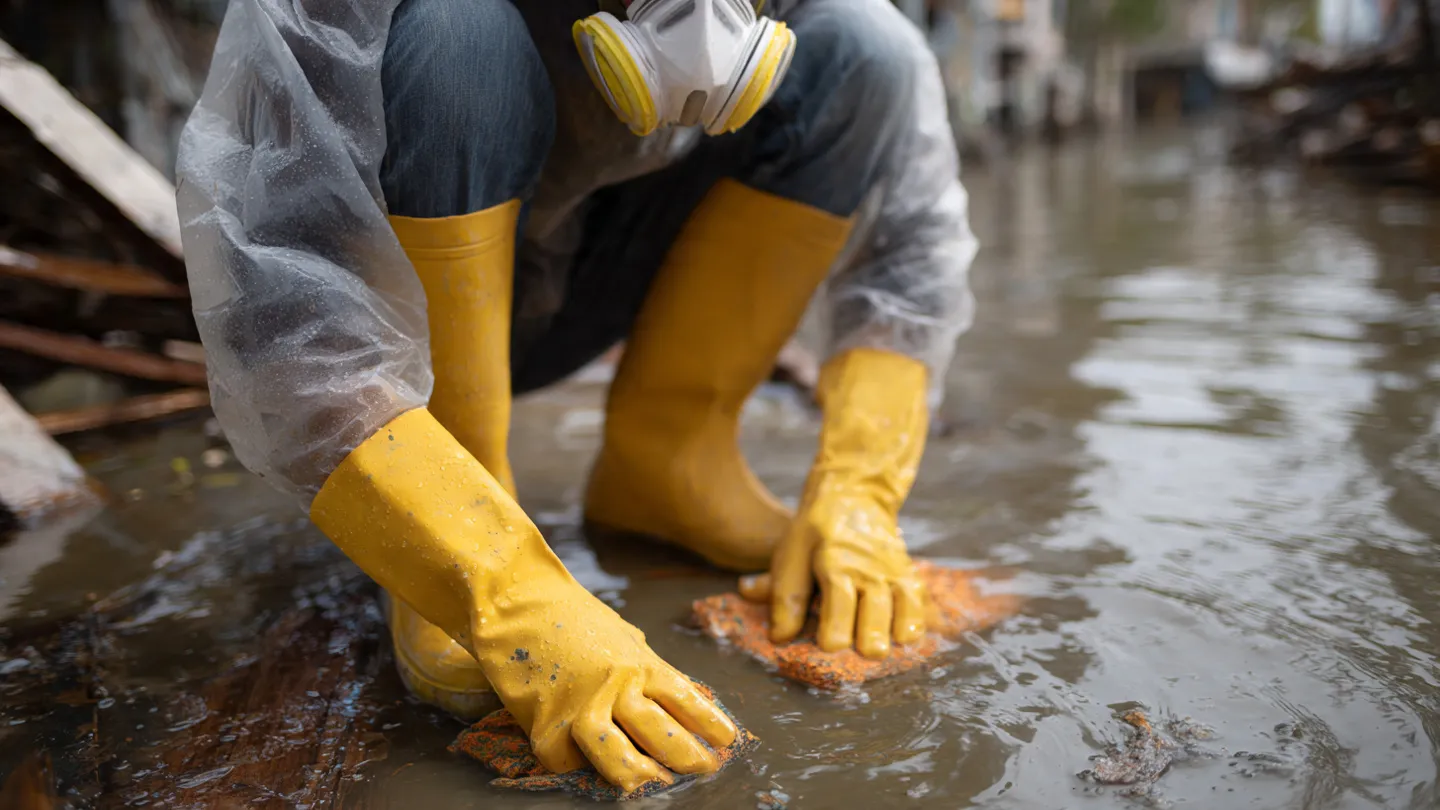
- Wear Protective Gear: Always wear rubber boots, waterproof gloves, and goggles. If you are cleaning up mold, use an N95 respirator mask to avoid inhaling spores.
- Cover Open Wounds: If you have any cuts or scrapes, cover them with waterproof bandages before going near the water.
- Sanitize Everything: Any item that came into contact with floodwater should be disinfected or discarded. This includes children’s toys, clothing, and furniture.
- Don’t Eat or Drink Near the Water: Keep food and beverages far away from the cleanup zone to prevent cross-contamination.
When to Seek Medical Attention
Despite your best efforts, exposure can happen. You should see a healthcare provider if you experience any of the following after navigating a flood:
- A cut or wound that becomes red, swollen, or oozing.
- Persistent vomiting, diarrhea, or stomach pain.
- Development of pain and skin conditions.
- Flu-like symptoms, including fever or chills.
- Shortness of breath or chest tightness.
It is also vital to keep your vaccinations up to date. If it has been more than 10 years since your last tetanus shot, you may need a booster if you receive a puncture wound or deep cut.
Conclusion
Flood recovery is physically and emotionally taxing, but your health must remain the top priority. Because floodwater contains hazardous bacteria, viruses, chemicals, and debris, it is essential to use protective gear, maintain strict hygiene, and hire professionals for remediation when necessary to ensure a safe cleanup process.