

Your refrigerator is one of the hardest-working appliances in your home. It runs continuously, day and night, to keep your food fresh and safe. To ensure it operates efficiently for years to come, regular maintenance is essential. Neglecting basic care can lead to poor performance, higher energy bills, and a shorter lifespan for your unit. This guide will walk you through the key steps to maintain your refrigerator and prevent costly repairs.
Clean the Condenser Coils
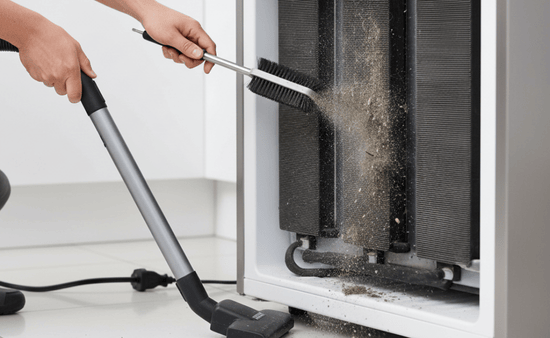
Condenser coils are crucial for releasing heat from the refrigerant. Over time, these coils can become covered in dust, pet hair, and debris. When this happens, the compressor has to work harder to cool the appliance, consuming more energy and leading to premature wear.
How to Clean the Coils
First, unplug your refrigerator to ensure safety. The coils are typically located on the back of the unit or underneath it, behind a grille. Refer to your appliance’s manual to find them. Use a coil cleaning brush or a vacuum with a brush attachment to gently remove all the accumulated dust and dirt. For best results, you should perform this task at least twice a year.
Check and Clean Door Seals
The seals, or gaskets, around your refrigerator doors are vital for keeping cold air in and warm air out. If these seals are dirty or damaged, your refrigerator will struggle to maintain its internal temperature. This inefficiency forces the cooling system to run more frequently, increasing your electricity consumption.
Inspecting and Maintaining Gaskets
Wipe the door seals regularly with a soft cloth and a mild detergent solution. This removes food particles and grime that can prevent a proper seal. To check for leaks, close the door on a piece of paper or a dollar bill. If you can pull it out easily without any drag, the seal may be weak and need replacement.
Maintain a Consistent Temperature
Setting the correct temperature is key to both food safety and energy efficiency. Your refrigerator compartment should be set between 37 and 40 degrees Fahrenheit (3 to 4 degrees Celsius). The freezer should be set to 0 degrees Fahrenheit (-18 degrees Celsius).
Adjusting and Monitoring Temperatures
Use an appliance thermometer to check the accuracy of your refrigerator’s internal temperature. Avoid adjusting the thermostat to its coldest setting, as this can overwork the compressor without providing significant benefits. Keeping the temperature stable helps protect sensitive components and ensures the unit runs smoothly.
Keep the Interior Clean and Organized

A clean and organized interior not only looks better but also helps your refrigerator function more effectively. Spills and food residue can harbor bacteria and cause odors. Moreover, an overstuffed refrigerator can block air vents, preventing proper circulation of cold air.
Best Practices for Interior Care
Clean the inside of your refrigerator every few months. Remove all shelves and drawers and wash them with warm, soapy water. Wipe down the interior surfaces with a solution of baking soda and water to neutralize odors.
When restocking, leave space between items to allow air to circulate freely. Proper airflow ensures all your food is cooled evenly. Modern refrigeration systems rely on a network of parts, from sophisticated electronics to simple but effective fractional-hp pumps, all working together to maintain this delicate balance.
Ensure Proper Airflow Around the Unit
Your refrigerator needs space to breathe. Placing it too close to a wall or enclosing it tightly in cabinetry can restrict airflow to the condenser coils. This traps heat, making the compressor work harder and less efficiently.
As a general rule, leave at least one inch of space on all sides and at the back of the refrigerator for adequate ventilation. By following these maintenance steps, you can significantly extend the life of your appliance and keep it running at peak performance.