
The world is changing at a breathtaking pace. From the integration of artificial intelligence in the workplace to the increasing need for global cultural competency, the skills required to lead effectively in the 21st century look vastly different than they did just a few decades ago. Future leaders will need to be agile, empathetic, and innovative problem-solvers who can navigate complex, interconnected systems.
As parents and educators, we face the critical task of ensuring that today’s students are ready to meet these challenges head-on. Traditional, one-size-fits-all education models often struggle to provide the nuance required to develop these multifaceted skills.
This is where specialized learning comes into play. By moving beyond rote memorization and standardized testing, specialized learning environments offer a dynamic approach that prepares students not just for college, but for life.
Specialized Learning: A Tailored Approach
Specialized learning is the antithesis of the “factory model” of education. It recognizes that every student has unique strengths, interests, and learning paces. Instead of funneling all students through the exact same curriculum in the exact same way, a specialized approach tailors the educational experience to the individual.
This method often involves smaller class sizes and more direct mentorship, allowing educators to identify a student’s specific leadership potential early on. Data suggests that students who feel “seen” and understood by their teachers are more engaged and willing to take the intellectual risks necessary for growth. By focusing on the individual, schools can cultivate confidence—a foundational trait for any future leader.
Tip: Look for educational environments that offer advisory programs or mentorship opportunities where students can set personal goals and track their own progress.
STEM Education: Building Innovation and Problem-Solving Skills
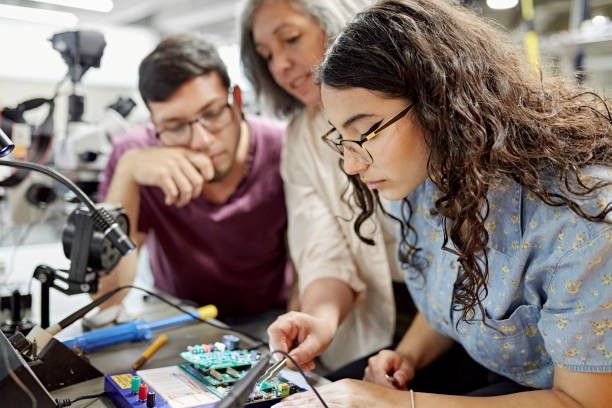
Leadership today is inextricably linked with technology and data. A robust STEM (Science, Technology, Engineering, and Mathematics) education does more than just teach coding or calculus; it teaches a specific way of thinking. It encourages students to approach problems methodically, test hypotheses, and learn from failure.
For instance, when students engage in robotics projects, they aren’t just building machines; they are learning how to troubleshoot in real-time and collaborate with a team to achieve a functional goal. These experiences mirror the challenges of the modern boardroom, where leaders must analyze data to make informed decisions and pivot strategies when initial plans fail.
Tip: Encourage students to participate in science fairs or coding clubs that require them to present their findings, helping them practice communicating complex technical ideas to a general audience.
Arts Integration: Fostering Creativity and Expression
While STEM provides the framework for technical problem-solving, the arts provide the soul of leadership: creativity and empathy. Integrating visual arts, music, and performance into the curriculum is essential for developing well-rounded individuals who can think outside the box.
Leaders must be able to envision solutions that do not yet exist, a skill directly nurtured through creative expression. Furthermore, the arts teach discipline and the value of perspective. A student learning a musical instrument understands that mastery takes patience, while a student in a drama class learns to step into another’s shoes—a practice that builds the emotional intelligence necessary for managing diverse teams.
Tip: Support participation in local art exhibits or school plays, as these activities build public speaking skills and confidence in front of an audience.
Personalized Learning Paths: Catering to Individual Needs
The journey to leadership is not linear. Some students may excel academically but need support socially, while others might be natural organizers who struggle with traditional testing. Personalized learning paths allow specialized schools to meet students where they are.
Flexible education plans empower students to take ownership of their schedule and learning outcomes. When a student is allowed to dive deeper into a subject they are passionate about, or given the extra time they need to master a difficult concept, they develop a sense of agency. This autonomy is a precursor to leadership; it teaches young people that they are responsible for their own success and that they have the power to shape their own future.
Tip: Ask potential schools about their flexibility regarding scheduling and curriculum design to ensure they can accommodate your child’s specific interests and pace.
Real-World Application: Connecting Learning to Life

Theory is important, but practice is paramount. Specialized learning environments excel at bridging the gap between textbook concepts and real-world application. This often takes the form of service learning, internships, or project-based learning where the classroom extends into the community.
When students engage with their city as “citizens” rather than just observers, they learn the mechanics of civic engagement and community stewardship. Whether it’s organizing a community clean-up or interning with a local business, these experiences provide a sandbox for leadership. Students learn to navigate professional environments, manage projects, and understand the impact of their actions on the wider community.
Tip: Encourage teens to volunteer for local nonprofits or student committees to gain firsthand experience in organizational logistics and teamwork.
Preparing for a Global Society: Cultural Competency and Awareness
Tomorrow’s leaders will operate in a globalized economy and a diverse society. An education that prioritizes cultural competency is no longer optional. Specialized learning often emphasizes inclusivity and global awareness, teaching students to respect and value different perspectives.
Curriculums that explore current events, global history, and foreign languages help students understand their place in the world. By fostering a culture of belonging and open dialogue, schools prepare students to lead diverse teams and navigate international partnerships with sensitivity and respect.
Tip: Encourage the consumption of diverse media, including international news and literature, to broaden a student’s worldview beyond their immediate community.
Conclusion: Investing in Tomorrow’s Leaders Today
The future requires leaders who are adaptable, creative, and socially conscious. While traditional education provides a baseline, specialized learning environments offer the tailored, immersive experiences necessary to cultivate these high-level skills truly. By integrating STEM rigor with artistic creativity, and balancing personalized attention with real-world responsibility, we can equip the next generation to lead with confidence.
For families investigating these options, the search for the right environment is the first step. Finding a college preparatory high school in Salt Lake City that values both academic excellence and character development can make all the difference in a young person’s trajectory. By investing in a holistic, specialized education today, we are ensuring a brighter, more capable leadership for tomorrow.