
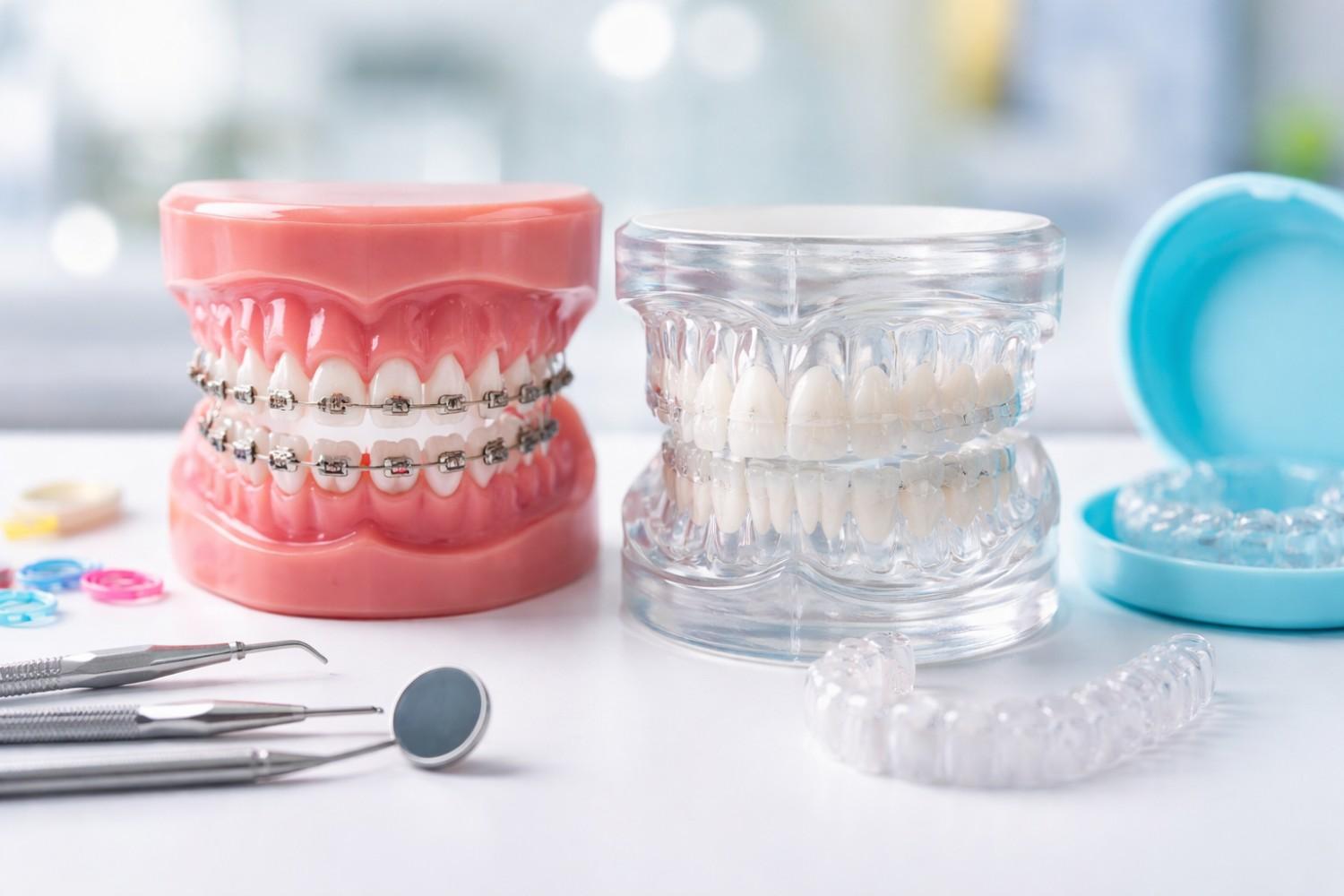
Orthodontics focuses on correcting misaligned teeth and jaws, addressing more than just cosmetic concerns. Misaligned teeth can lead to tooth decay, gum disease, tooth loss, and strain on chewing muscles, causing issues like headaches, TMJ syndrome, and pain. This guide covers modern treatments, including braces and aligners, to help you choose the best option for your oral health.
The Enduring Effectiveness of Traditional Braces
Despite the surge in newer technologies, traditional braces remain the gold standard for treating complex orthodontic issues. They offer a level of control and precision that is sometimes difficult to achieve with removable appliances.
Components and Application
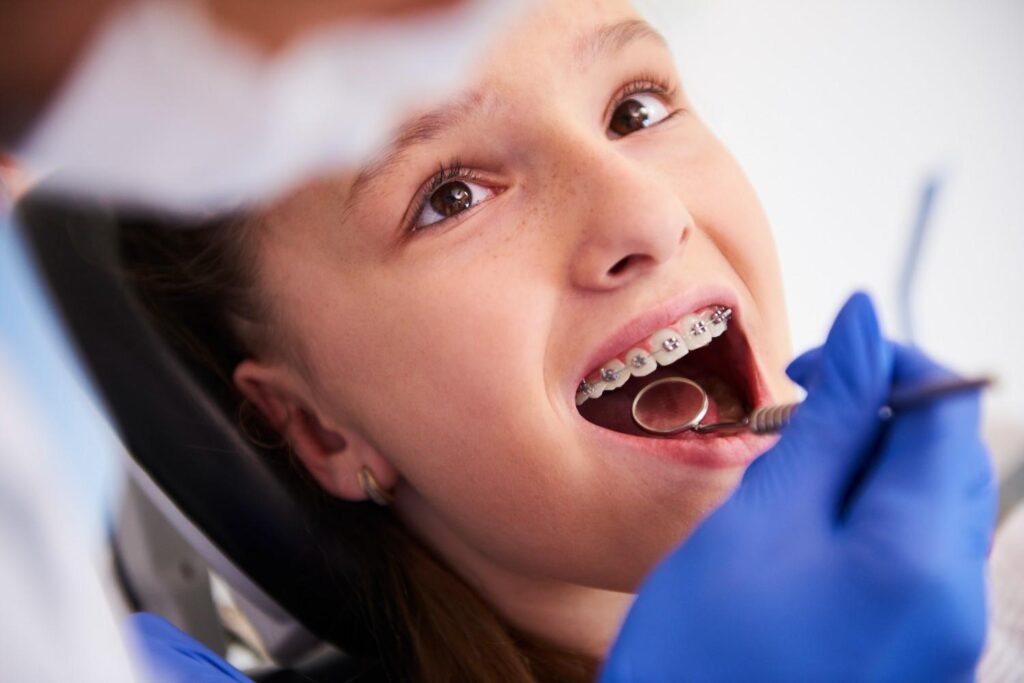
Traditional fixed braces consist of standard components that work together to apply continuous pressure over time to slowly move teeth in a specific direction.
- Brackets: Small squares bonded directly to the front of each tooth. While stainless steel is the most common, ceramic brackets are available for a more subtle look.
- Archwires: These wires attach to the brackets and act as the track to guide the movement of the teeth.
- Ligature Elastics: Also known as “o-rings,” these small rubber bands hold the archwire to the brackets.
As the bone changes shape in response to the pressure applied by these components, the teeth move into their desired positions.
The Pros and Cons
The biggest advantage of braces is their versatility. They can correct almost any misalignment, from severe overcrowding to complex bite issues. Because they are fixed to the teeth, they work around the clock without relying on the patient to remember to wear them.
However, they do come with downsides. Hygiene requires more effort, as food easily gets trapped in the brackets and wires. Flossing, in particular, requires threading the floss under the wire, which can be time-consuming. Additionally, there is the “metal mouth” aesthetic that some adults find unappealing, though ceramic options mitigate this.
The Rise of Clear Aligners
For many adults and teens, clear aligners (such as Invisalign) have revolutionized orthodontic treatment. This method moves teeth without the use of brackets and wires.
How Aligners Work
Instead of fixed hardware, this treatment utilizes a series of custom-made, clear plastic trays. You wear each set of trays for one to two weeks before switching to the next set in the series. Each tray is slightly different from the last, designed to shift your teeth incrementally.
Suitability and Lifestyle
Aligners are incredibly popular because they are virtually invisible. Unless someone is standing very close to you, they likely won’t notice you are wearing them. They are also removable, which means you can take them out to eat, brush, and floss. This eliminates the dietary restrictions that come with braces—you can still eat popcorn, nuts, and sticky foods, provided you take your trays out first.
However, the removability is a double-edged sword. For the treatment to work, the aligners must be worn for 20 to 22 hours a day. If you take them out and forget to put them back in, your treatment will stall or even regress. Furthermore, while aligner technology has advanced rapidly, it may not be suitable for correcting severe rotation or vertical movement of teeth.
The Critical Role of Jaw Alignment
Orthodontics is not just about the teeth; it is about how the upper and lower jaws meet. This relationship is called occlusion. When the jaws do not align properly, it is known as malocclusion, which can manifest as an overbite, underbite, crossbite, or open bite.

Why Jaw Alignment Matters
Correcting jaw alignment is crucial for long-term health. A misaligned bite can cause uneven wear on your tooth enamel, making teeth more susceptible to chipping or breaking. It can also impede proper chewing and digestion and lead to speech impediments.
Perhaps most significantly, poor jaw alignment is a leading cause of Temporomandibular Joint (TMJ) disorders. This can result in chronic jaw pain, clicking or popping sounds when opening the mouth, and frequent migraines.
Methods of Correction
For many patients, especially children and teenagers whose bones are still developing, appliances like palatal expanders or headgear can guide jaw growth into the correct position. Rubber bands (elastics) used in conjunction with braces are also a common method for adjusting the bite.
In adult patients where bone growth has stopped, correcting severe skeletal discrepancies might require a combination of orthodontics and orthognathic (jaw) surgery. This is an extensive process where an oral surgeon repositions the jawbones, and the orthodontist fine-tunes the bite.
In some complex restorative cases, orthodontics is just one phase of a larger plan. For example, a patient might need to straighten teeth to make room for replacements before seeking affordable dental implants in Hutto, TX or a similar provider in their local area to complete their smile restoration.
Conclusion
Choosing between braces, aligners, or more complex jaw therapies is a decision that should be made with a professional. While clear aligners offer freedom and aesthetics, traditional braces provide reliable results for difficult cases.